NEW MINISTER FOR WELFARE MINISTER OF MALAYSIA

NEW MINISTER FOR WELFARE MINISTER OF MALAYSIA
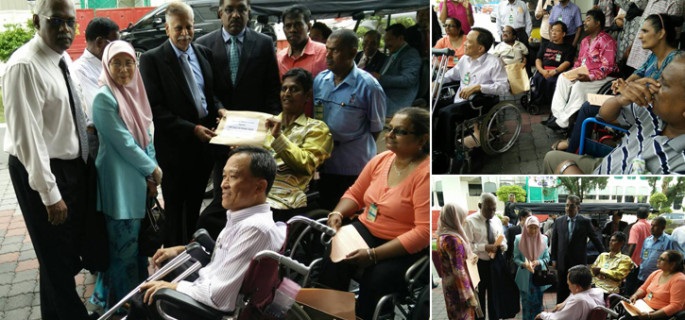
Badan Latihan dan Hidup Berdikari Malaysia (ILTC) pada 23hb Mac 2016 menyerahkan memorandum kepada ahli-ahli parlimen mendesak supaya golongan orang kurang upaya (OKU) dikecualikan daripada cukai barangan dan perkhidmatan (GST).

Disabled Members Protest

Disabled Members Protest
Disabled Members Protest at JPJ Wangsa Maju

ILTC Malaysia members staged a protest outside JPJ Wangsamaju KL.

ILTC Malaysia members staged a protest outside JPJ Wangsamaju KL.
Disabled group’s protest disabled drivers required to produce doc's medical report.

Saturday, 1 October 2011

KL mayor asks for tolerance in Brickfields


KL mayor asks for tolerance in Brickfields

Friday, September 30th, 2011 12:11:00

KUALA LUMPUR: KL mayor Tan Sri Ahmad Fuad Ismail said stalls in Brickfields would be allowed to continue operating for another month.

He was responding to a query by The Malay Mail on traders in Brickfields hogging walkways along Jalan Tun Sambathan, making it difficult for pedestrians, especially the blind, to move around the area.

He said while he understood the plight of pedestrians, traders should also be given a chance to do business.
“Give them a month. Give them a chance to work," he said.

He said tourists and locals flock to Little India in Brickfields, especially during Deepavali, and that City Hall had to allow the traders to set up stalls there.

“We allow this at other places during the Ramadan month and if we don’t do the same during Deepavali, people will complain and say we are being unfair.”

The walkways around Brickfields are marked extensively with raised lines and dots for the blind.

The Malay Mail had also received calls from the public claiming stalls in the area were causing traffic congestion as unloading of goods were done by the roadside.

Shahrizat: Show the blind some respect


Shahrizat: Show the blind some respect

Friday, September 30th, 2011 12:14:00

KUALA LUMPUR: Women, Family and Community Development Minister Datuk Seri Shahrizat Abdul Jalil will sit with City Hall to discuss how to tackle the issue of petty traders taking up walkways in front of shop lots in Brickfields, a norm when Deepavali is just around the corner.

"City Hall must take necessary action on this matter and we will inform them about this," she said.

Shahrizat expressed her disappointment with Malaysians when it comes to respecting the disabled community.

"It is important everybody is aware of this. Traders cannot do this. That's why advocacy is important. I am disappointed Malaysians are not considerate enough about the disabled.

"Ordinary citizens must have respect and consideration for the disabled as we want to be a barrier-free country.

"There needs to be more advocacy and awareness. Mindsets must change."

Welfare benefit for all visually-impaired


Friday, September 30th, 2011 12:11:00

KUALA LUMPUR: Beginning tomorrow, individuals who are blind in one eye will be classified as a disabled person and can receive privileges under the Social Welfare Department.

Women, Family and Community Development Minister Datuk Seri Shahrizat Abdul Jalil said the decision was made at a meeting of the National Council for the Disabled.

"This will enable the people who fall under this category to get the same privileges enjoyed by other disabled people when they register with the Social Welfare Department," she said at a Press conference after launching the 60th Anniversary of the Malaysian Association for the Blind (MAB), yesterday.

Shahrizat added local authorities throughout the nation are required to include a representative from the disabled community in their planning and development committee.

"This is part of the ministry's effort to mainstream the disabled community's issues into the development of the nation towards ensuring that Malaysia is a barrier free country."

Local authorities will be required to set up an audit access unit to ensure all public facilities are properly monitored and maintained.

Mixed reactions by disabled-friendly NGOs

THE Women, Family and Community Development Ministry's move to classify individuals who are blind in one eye under the disabled (OKU) category, requiring local authorities to elect a disabled representative to sit in their planning and development committee and to set up an audit access unit, received mixed reactions from several non-governmental organisations (NGOs) championing the cause.

Malaysian Association for the Blind (MAB) president Datuk Dr Abdullah Malim Baginda said categorising those blind in one eye as OKU would help them tremendously, especially if they are poor.

"They will receive OKU cards and get discounts for medical treatments and free medical check-ups," he said.
Dr Abdullah Malim said electing an OKU representative to sit in local authorities' planning and development committee would ensure the needs of their community were met.

"At the moment, we do sit in committee meetings but only informally. Sometimes, we also get called in for audit checks by several companies," he said.

One such company he cited was Keretapi Tanah Melayu Berhad, to which he tested their disabled-friendly facilities two weeks ago.

For Independent Living and Training Centre (ILTC) president Francis Siva, he opined the move should have been done 15 years ago.

"We also need to know who will monitor the committee and ensure this policy is carried out. There has to be a proper mechanism," he said.

However, Francis felt the efforts would not solve all problems faced by the disabled community unless "a disabled person is elected as a councilor in every local council.

"This would be more effective as our suggestions can be discussed at full board meetings and have a budget allocated for it."

Persatuan Kurang Upaya Anggota Melayu Malaysia (Permata) president Suhairi Abdullah, was unhappy those blind in one eye were categorised as OKU.

"Why does the government want to help people who are still able-bodied? They are not completely blind.

"If this is the case, soon, people who are deaf in one ear or people who do not have one leg will also be under the disabled category," he said.

"Currently, OKUs with a salary of RM1,200 are eligible to receive a monthly disabled worker allowance of RM300. If the partially-blind are considered OKUs, the government might have to fork out more."

Thursday, 29 September 2011

Bernama - Disabled people category extended to those 'blind in one eye'

Published: Thursday September 29, 2011 MYT 3:02:00 PM
Updated: Thursday September 29, 2011 MYT 4:21:45 PM

Disabled people category extended to those 'blind in one eye'


KUALA LUMPUR: Individuals who are blind in only one eye will be classified under the disabled people category from Saturday.

Women, Family and Community Development Minister Datuk Seri Shahrizat Abdul Jalil said the decision was made at a meeting of the National Council for the Disabled on Tuesday to enable this category of people to receive the same privileges as other disabled persons when they register with the Social Welfare Department.

In addition, she said, local authorities throughout the nation were required to include a representative from the disabled community in their planning and development committee. Bernama

PROGRESS REPORT:Updates - Photos of Construction Progress at ILTC Project on 29/09/2011


Saturday, 24 September 2011

Helping disabled drivers in a breakdown


Thursday September 22, 2011

Helping disabled drivers in a breakdown


Suggestions for vehicle breakdown services on handling emergencies involving disabled drivers.

A FORTNIGHT ago I wrote about a horrible encounter I had at a hypermarket in Shah Alam.

Despite the store being equipped with disabled-friendly car parks and toilets, the experience was still a nightmare.

As a wheelchair user I found much to my chagrin that I was not able to use the facilities.

This was because the management had failed to ensure that the handicapped-friendly facilities in their premises were not abused by non-disabled shoppers.

The car parks were all taken up by non-disabled drivers and I had to wait for a young able-bodied man to finish up before I could use the loo for the disabled.

And even when my car battery suddenly went flat, I was not able to get the help that I so desperately needed, even though I was in the company of scores of shoppers around me.

It was a wake-up call for me to not take things for granted in future.

Just because I happened to be in a disabled-friendly building didn’t necessarily mean that the people there would be as friendly or helpful to a disabled person.

It ought to have happened that way of course, but sadly it didn’t.

And the way I see it, the problem was clearly with the management.

If they had provided the proper training for their front desk staff, the situation would have been different.

Even the rescue team from the Automobile Association of Malaysia (AAM), of which I am a member, treated my SOS call as a normal routine alert when I rang them up.

When I told them I was a disabled driver, it made no difference to them. They just told me what they would say to anyone: “We’ll get to you in about 45 minutes.”

They only arrived about an hour and a half later, blaming the delay on heavy traffic. It was a disappointment that they made no follow-up calls to me during the waiting period to inform me of the delay.

Looking back on what happened, here are some suggestions to AAM and other vehicle breakdown services on how they can be more professional and helpful when it comes to handicapped drivers who are left stranded:

1. Check whether the driver is safe.

Instead of giving handicapped drivers the standard “45-minute” waiting time, find out first if they are safe. A handicapped driver could be stuck in the middle of the highway against speeding traffic. Are they alone or do they have someone who could help them?

In emergencies where one’s vehicle has stalled in the middle of the road or even on the fast lane, rescue services should link up with the traffic police to intervene.

Remember, a person in a wheelchair can’t get out of the car and even call for help from other drivers.

2. Find out more about the drivers’ disabilities.

Are they totally unable to walk? Or do they have walking difficulties? Do they use crutches, walking sticks, etc, for mobility? Do they have a wheelchair in the car or in the back seat? Can they get out of the car by themselves? Can they take out their wheelchair by themselves?

It is also helpful to ask if they are on any medication, suffer from asthma, etc, as all this can be triggered when one is in a panicked situation.

In such situations, personnel manning the call centre should have some knowledge about disabilities so that they can deal with handicapped callers more effectively.

Please note that for the able-bodied, they can just get out of their car and get to a safe place. People with disabilities often don’t have such options.

3. Speak calmly and confidently to the driver.

This will make them less nervous. Try to understand the great vulnerability that the disabled driver would be feeling at that time, especially if they are alone. They could also be sitting ducks for robbers who might take advantage of their situation.

In my case, AAM could have called the hypermarket’s customer service and informed them about where I am so that they could come to my aid.

4. Keep up the communication.

All rescue services should not merely inform that help is on the way but also keep in constant contact with the handicapped caller in distress to help him or her remain calm until service arrives.

This would be professionalism at its best.
Friday, 16 September 2011

PROGRESS REPORT: Updates - Photos of Construction Progress at ILTC Project on 10/09/2011

PROGRESS REPORT:

Updates - Photos of Construction Progress at ILTC Project on 10/09/2011


துன் டாக்டர் மகாதிà®°் பின் à®®ுகமது

துன் டாக்டர் மகாதிà®°் பின் à®®ுகமது


1. துன் டாக்டர் மகாதிà®°் பின் à®®ுகமதின் இயற்கை பெயர் மஹாதிà®°் த/பெ இஸ்கந்தர் குட்டி.

2 . மகாதிà®°் ஜூலை à®®ாதம் 10 ஆம் நாள் 1925 இல் கெடா à®®ாநிலத்தில் பிறந்தாà®°்.

3 . இவரின் தந்தை இஸ்கந்தர் குட்டி கேரளா à®®ாநிலத்தில் இருந்து இங்கு புலம் பெயர்ந்து வந்த à®’à®°ு மலையாளி. இவர் à®’à®°ு பள்ளி ஆசிà®°ியர்.

4 . இவரின் தாயர் வான் தெà®®்பாவான் மலேசியாவில் பிறந்த மலாய்காà®°à®°் .


5 . தான் à®’à®°ு இந்திய வம்சாவளியில் வந்தவர் என்பதை ஒத்துகொண்டாலுà®®் இவர் தன்னை à®’à®°ு மலாய்காà®°à®°் என குà®±ிப்பிட படுவதையே விà®°ுà®®்புகிà®±ாà®°். அது மட்டுà®®் இன்à®±ி மலாய் à®®ேலாண்à®®ை குà®±ித்து இவர் அதிகம் பேசியுà®®் எழுதியுà®®் உள்ளாà®°்.

6 . இவர் மருத்துவம் பயின்à®± சிà®™்கபூà®°் பல்கலைகழகத்தில் இவர் தன்னை à®’à®°ு இந்தியன் என்à®±ே குà®±ிப்பிட்டுள்ளாà®°்.

7 . தனது இந்திய அடையாளத்தை இவர் எப்போதுà®®ே வெளிகாட்டுவதில்லை. அப்படி சொல்வதை வெட்கமாக கருதுவதாக கருத்து உள்ளது.

8 .1981 ஆம் ஆண்டு ஜூலை 16 - 31 அக்டோபர் 2003 வரை இவர் பிரதமராக இருந்தாà®°்.

9. நான்காவது பிரதமரான இவர் ஆசியாவின் நீண்ட காலம் சேவையாà®±்à®±ிய பிரதமர் ஆவர். இவரின் கீà®´் நால்வர் துணைப்பிரதமராக இருந்துள்ளனர்.

10. 1945 இல் அரசியலில் ஈடுபட ஆரம்பிட்ட இவர் 1946 இல் ஆரம்பிக்க பட்ட à®…à®®்னோவின் ஆரம்பகால உறுப்பினர் ஆவர்.

11. சீனர்களின் வாக்குகள் தேவை இல்லை என à®…à®±ிவித்ததனால் 1969 இல் நடந்த தேà®°்தலில் 989 வாக்குகள் வித்தியாசத்தில் இவர் தோல்விகண்டாà®°்.

2004 ஆம் ஆண்டு சுதந்திà®° தினத்தில்
மகதீà®°ை சிறப்பு செய்யுà®®் வகையில் TM
கட்டிடத்தில் அவரின் padam
12. தனது பதவியை தக்க வைத்துக்கொள்ள இவர் மத மற்à®±ுà®®் இனவாத அரசியை கையாண்டாà®°். இதனை மலேசியர்கள் மகாதிà®°்ஸ்à®®் என குà®±ிப்பிடுவதுண்டு.

13. இவரது ஆட்சி காலத்தில் மலேசியா துà®°ித à®®ுன்னேà®±்றம் அடைத்தது.

14. இவரது ஆட்சி காலத்தில் தான் இந்தியர்கள் பலவகையிலுà®®் ஓரங்கட்டப்பட்டனர்.

15. இவரது ஆட்சி காலத்தில் பேச்சு சுதந்திà®°à®®் குà®±ைவாக இருந்தது.

16. பிà®± தலைவர்கள் உருவாகுவதை விà®°ுà®®்பாதவர் என்à®± குà®±்றசாட்டுà®®் இவர் à®®ேல் உள்ளது.

17 . 1987 இல் கட்சி தேà®°்தலில் நடந்த தில்லுà®®ுல்லுகள் காரணமாக 1998 இல் à®…à®®்னோ நீதிமன்à®± தீà®°்ப்பு à®®ுலம் தடை செய்ய பட்டதை தொடர்ந்து இவர் புதிய à®…à®®்னோவை துவக்கினாà®°்.

Thursday, 15 September 2011

A big step forward


Thursday September 15, 2011

A big step forward

Local councils get a nudge in the right direction.

SYABAS to Women, Family and Community Development Minister Datuk Seri Shahrizat Abdul Jalil for playing an instrumental role last week in persuading the Cabinet to make a positive move in the interest of the country’s disabled community.

The minister succeeded in getting her colleagues to push for the appointment of people with disabilities (PWDs) in special committees in every local council.

This is to ensure that basic issues such as accessibility will no longer be overlooked and neglected by city and town council planners and engineers.

The move follows a similar directive given by Selangor Chairman of the Local Government, Study and Research Committee Ronnie Liu to all 12 local councils in the state earlier in the year.

I think it is great that both these politicians have put aside their party’s differences momentarily in such an exemplary way to focus on the handicapped community which is struggling with the most basic issues.

They have pointed out that if disabled people are ever going to catch up with the rest of the nation, it must start with the local councils.

To put it in a nutshell, when the disabled are able to use the pavements or access buildings with their wheelchairs, only then will they be able to find jobs, take care of themselves and live like the rest of society.

No amount of admonition from politicians is going to make a difference for the more than 10% of the population, coupled with the growing number of elderly citizens, if local councils do not get into the act.

As chairman of Petaling Jaya City Council’s technical committee on disability, here are some tips from MBPJ for those who are unsure of how to get a committee going or what to do after that:

> Choose your PWDs wisely. Although it is imperative to have people with handicaps in the meetings, make sure the ones you pick will be able to contribute. There is no time to lose, so do not get people who will just warm the seats. The ones picked must be serious, dedicated and knowledgeable. This may require some orientation and exposure of how councils operate to give each PWD an idea of what is expected of them.

> Have meetings once a month: There is so much to catch up on and monthly meetings will help to get things going.

> Have a wide and varied representation: Don’t only think of those in wheelchairs. It’s vital to get others like the blind, the deaf, people with learning disabilities, little people and even the elderly with physical problems. Don’t forget parents of PWDs, too. They often have great ideas but don’t have the opportunity to voice them.

> Invite active NGOs: Think of support groups for people with stroke, Parkinson’s and even epilepsy, not just people with physical disabilities or those in wheelchairs. People with walking disabilities have a lot to contribute, especially in the way pavements are designed. Having said that, don’t forget individuals with disabilities as well. Because many of them may have been locked away in their homes as the local councils had forgotten about their needs, they may present the best ideas.

> Provide or pay for their transport: This is the least councils can do for their invaluable input.

> Approve new buildings only when they get the blessing of the committee. The PWDs’ views should go hand-in-hand with the local councils’ engineering and planning department.

> Organise regular site visits: Each local council should organise regular visits to the new buildings during construction to make sure that everything is in order.

> Hold social awareness programmes: International Day for the Disabled on Dec 3 and other special days such as Parkinson’s Day, World Mental Health Day, Older Persons Day and White Cane Day are all excellent opportunities for local councils to highlight and involve the public.

> Exemplary certificates as recognition: Identify buildings, restaurants and even homes for the disabled and elderly that provide proper facilities and appreciate them for their deeds. This is a very effective way to get more outfits to create a better world for PWDs.

> Slow and steady will get you there: Don’t be in a rush to get everyone on board. You can invite them over the weeks and months. Starting small will also help you to make sure that you have the right people on board who can help you reach your target.

So to all the local councils everywhere: Good luck!

Monday, 12 September 2011

New Cheras bus terminal disabled-friendly

Disabled commuters can look forward to service with a smile at Terminal Bersepadu Selatan in Cheras, Kuala Lumpur.

New Cheras bus terminal disabled-friendly


Disabled commuters can look forward to service with a smile at Terminal Bersepadu Selatan in Cheras, Kuala Lumpur.

LAST week, we were pleasantly surprised to receive an invitation from Maju Terminal Management and Services (Maju TMAS), the operators of the new bus terminal, Terminal Bersepadu Selatan at Bandar Tasik Selatan (TBS-BTS) in Cheras, Kuala Lumpur. They wanted us to check out the disabled-friendly features at the terminal.

Maju Holdings, the parent company of Maju TMAS, was awarded a design-and-build contract in November 2007. They had the mammoth task of constructing the RM570mil terminal within three years. The terminal would serve as an integrated transportation hub where the public can commute by bus, taxi and rail. Bandar Tasik Selatan was identified because of its ERL and Komuter rail lines.

The terminal which began operating at the start of this year, has replaced the newly renovated Pudu Raya bus station for all south-bound buses.

A key feature of TBS-BTS is the disabled-friendly facilities which also cater to the elderly.

Special service: Wheelchair-users can purchase tickets with ease at dedicated counters for the disabled and the elderly at Terminal Bersepadu Selatan in Cheras, Kuala Lumpur.

So when I was invited to offer feedback on the company’s efforts in looking into the needs of handicapped users, I was quite excited.

As chairman of the disability technical committee of the Petaling Jaya City Council (MBPJ), which offers advice on handicapped-friendly features to developers, I thought it would be a good idea to bring along some of my team members with disabilities, as well as MBPJ’s planning and engineering staff.

Now, I must admit that we were half-expecting to see things that were not in proper order at the terminal, because of past experiences with other outfits which promised the same thing but turned out to be the opposite.

But boy, were we in for a surprise! The first thing that we were thrilled to notice at the terminal were the guiding blocks for the blind. These bright yellow tiles with grooves in them – also called tactile flooring – help the blind find their way about independently.

If you live in KL or PJ, you are likely to notice more and more of them being built in the outside environment, especially on the pavements.

However, what is notable about TBS-BTS’ tactile flooring is that they are also placed inside the terminal. This is exactly how it should be done – both outside and inside.

Long stretches of tactile lines from outside of the terminal effectively lead blind commuters into the building all the way to the information and ticketing counters.

They are also designed to guide the visually impaired into the restrooms which are wheelchair-friendly.

Our blind technical expert was thrilled. He used his white cane to cover almost the entire building.

Most buildings that claim to be friendly to the blind, sadly stop short of providing tactile flooring inside the building. This leaves blind visitors at a loss over what to do next when they are inside. Although our expert is blind, he was quick to point out areas that could do with some improvement. Some of the tactile lines, for instance, were not continuous at entry points such as the doors. For some reason, the able-bodied designers had overlooked this.

There were also certain areas where the management had placed chairs, stand-up signs for the public to queue up or other obstructions close to the markings. Blind commuters may accidentally knock into them.

As for wheelchair-users, there were three of us, including me. We represented various degrees of handicaps and gave our views based on our personal experiences.

We pointed out that the “lowered public phone booths” were not low enough for our wheelchairs. Some of the fittings such as the sink, water closet and dustbin in the restrooms were more of an obstruction than a help.

However, overall the boys at TBS-BTS had done an amazingly good job. We appreciated their willingness to receive feedback from us in good faith.

They said our feedback was a challenge to them to strive to make their terminal even better for persons with special needs.

The best news was that the terminal staff would be trained to go the extra mile to help all disabled commuters.

We were told that even before commuters with disabilities could approach the respective counters, the staff would get to them first.

With its golden service and improvements in the pipeline, TBS-BTS is certainly headed in the right direction. Syabas!

Cabinet defers decision on KLIA 2 aerobridges


Cabinet defers decision on KLIA 2 aerobridges


PUTRAJAYA (Sept 7, 2011): The cabinet has deferred its decision on the installation of aerobridges at the Kuala Lumpur International Airport 2 (KLIA 2) low-cost carrier terminal pending further studies on the matter, said Transport Minister Datuk Seri Kong Cho Ha today.

The cabinet will continue the feasibility study on installing aerobridges in response to the plight of the disabled community’s protest over Malaysian Airport Holdings Berhad’s (MAHB) decision not to instal the aerobridges.

Kong had promised to bring up the matter to the cabinet after meeting 11 representatives from the disabled community yesterday, including non-governmental organisation (NGO).

“I brought up the issue during the discussion of the paper by (Women, Family and Community Development Minister) Datuk Seri Shahrizat (Abdul Jalil) that all public buildings must comply with disabled community friendly facilities.

“I met their representatives and I have informed the cabinet that KLIA 2 and generally all new main international airports need to have aerobridges. As the government, we must be caring and sympathetic to their needs,” Kong told theSun over a phone interview today.

However, Kong also said the Cabinet has “deferred making a decision, pending further studies on the matter”.

“This is the Cabinet’s decision. My stance on their plight is very clear. I am very sympathetic and I support their cause because the aerobridge can also be beneficial to others including pregnant mothers, infants and parents with infants and the elderly,” said Kong.

In a press conference earlier this week, Kong also said that KLIA is renowned worldwide as a first-class airport which means it should have “first-class facilities and not third-class facilities.”

The disabled community falls under the jurisdiction of the Women, Family and Community Development Ministry. When asked whether its minister or any other members of the cabinet supported his proposal, Kong declined to comment.

Yesterday, 11 representatives from the disabled community met with Kong over the controversial decision by MAHB to forego the installation of 80 aerobridges at its new LCCT in KLIA 2 as it was not in line with AirAsia’s requirements and business model.

Its chairman Tan Sri Aris Othman said in July that the total cost for 80 aerobridges is around RM104 million. The RM2 billion KLIA 2 is expected to be completed in the second half of this year with an annual capacity 30 million passengers.